
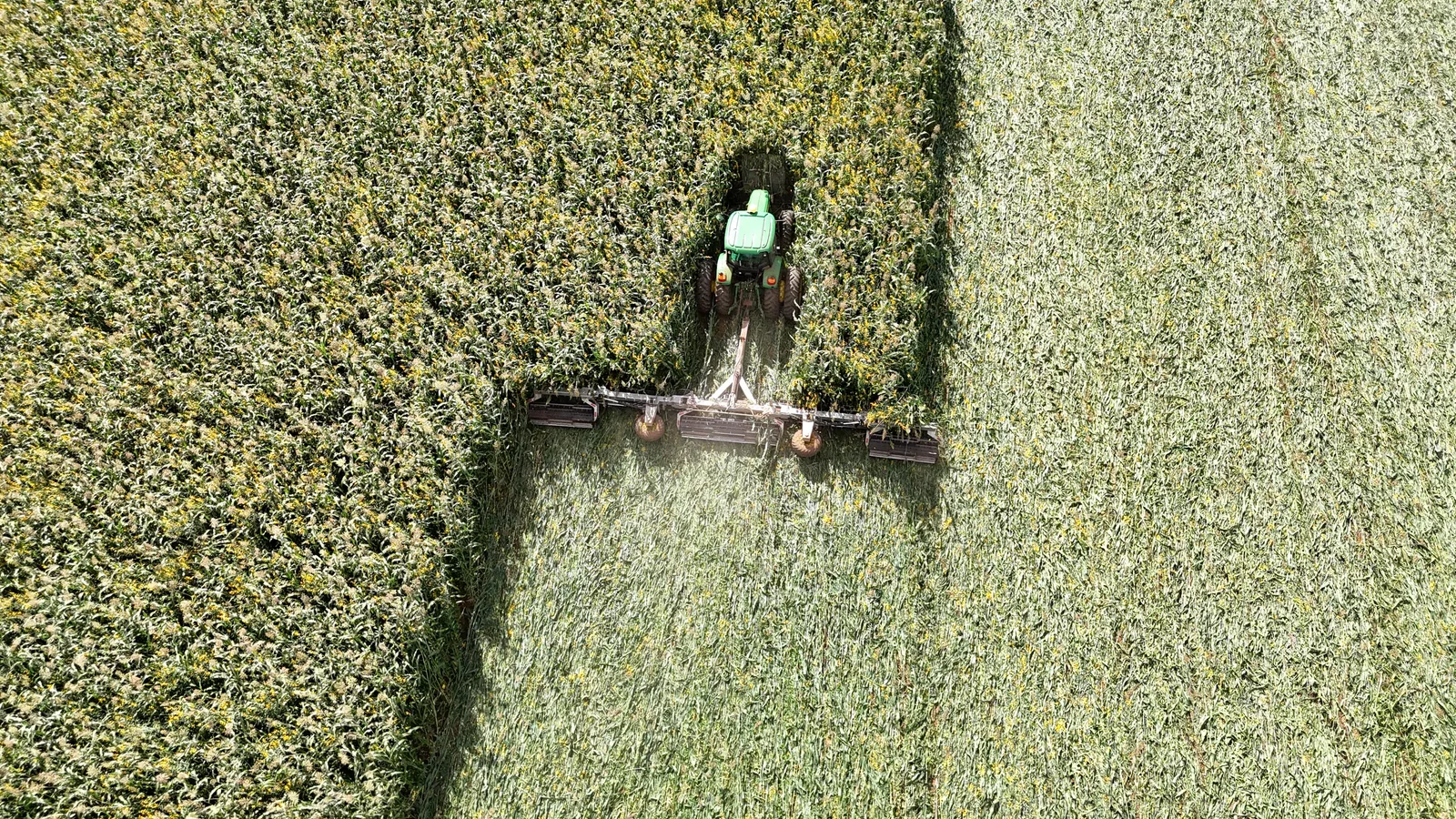
The residue layer begins before the implement enters the paddock. The cover crop produces the biomass; the knife roller lays it down and manages that material on the surface.
What does a knife roller do?
During operation, the implement lays down vegetation and cuts or crushes stems to varying degrees. Where there is enough biomass and it is well distributed, the material can remain on the surface as a protective residue layer.
The implement does not produce biomass by itself, and results vary between paddocks.
Plant growth stage matters
Species, growth stage and moisture influence how plants are laid down, whether they regrow and how long residues persist. Timing should therefore not be based on the calendar alone.
Also consider the management objective, the next crop and whether additional management will be required.
What does the research indicate?
Brazilian studies involving black oats and a black oat–forage radish mixture found substantial soil cover after knife roller management under the conditions studied.
These results help explain the method. They do not establish universal superiority over shredding, mowing, chemical termination or standing residues, and should not be turned into guaranteed percentages for a particular farm or implement.
What to assess before operation
- The cover crop species or mixture.
- Plant growth stage.
- Biomass quantity and distribution.
- Soil and vegetation moisture.
- Slopes and surface regularity.
- The following crop and seeding equipment.
- Whether additional management is needed.
Advice should reflect the paddock
A knife roller can help lay down cover crops and retain residues on the surface within a no-till system. Results depend on the combination of plants, environment, timing and operation.
This is general guidance. Management decisions should reflect farm conditions and advice from the agronomist responsible for the paddock.